
SEO Process: Complete Guide for Maximizing Online Visibility
Search Engine Optimization is a major digital marketing procedure designed to upgrade website visibility in search engine results, increase organic traffic, and improve brand awareness. Here Below indicated a detailed step-by-step guide on an Powerful SEO process for your website:
1. SEO Audit and Analysis
The first step in any SEO Plan is conducting a Guide audit of your website. This helps identify strengths, weaknesses, and opportunities for advance.
Key Activities:
- Analyze website structure and navigation
- Assess page loading speed.
- Check for mobile-friendliness.
- Conduct backlink analysis.
- Audit on-page SEO elements like metadata, titles, and tags.
2. Competitor Analysis
Understanding your competitors’ plan can provide valuable understanding to outperform them.
Key Activities:
- Identify top-ranking competitors.
- Analyze their keyword strategies.
- Review their content marketing efforts.
- Study their backlink profiles.
- Audit on-page SEO elements like metadata, titles, and tags.
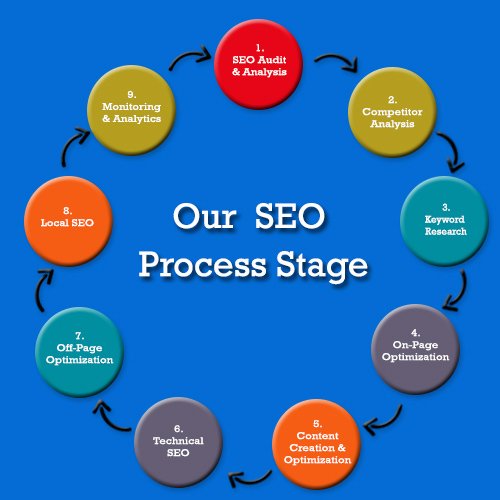
3. Keyword Research
Powerful SEO starts with selecting the right keywords that your target audience uses to discover products or services.
Key Activities:
- Utilize tools like Google Keyword Planner, Ahrefs, or SEMrush.
- Basis on both short-tail and long-tail keywords.
- Analyze search intent.
- recognize low-competition, high-traffic keywords.
4. On-Page Optimization
Optimizing individual pages helps search engines understand and rank your content very good performance.
Key Activities:
- enhance title tags, meta descriptions, and header tags.
- Ensure keyword placement in content naturally.
- Use internal linking for better site navigation.
- Improve images with proper alt text and URL structure.
5. Content Creation and Optimization
Content remains king in SEO. High-quality, informative content attracts and gain users.
Key Activities:
- Create blog posts, guides, and landing pages.
- Update and refresh existing content.
- Focus on user intent and readability.
- Incorporate multimedia elements.
6. Technical SEO
Technical optimization secure search engines can crawl and index your website efficiently.
Key Activities:
- Improve site speed and performance.
- Implement schema markup.
- Ensure mobile-friendliness.
- Fix broken links and redirects.
- improve XML sitemaps and robots.txt files.
7. Off-Page Optimization
Structure a strong backlink profile action to search engines that your website is reliable and accurate.
Key Activities:
- Get high-quality backlinks from respectable websites.
- Engage in guest blogging.
- Build relationships with influencers and industry experts.
- Promote content on social media.
8. Local SEO
For businesses targeting a fix geographic location, local SEO is essential.
Key Activities:
- Claim and optimize Google My Business listing.
- Optimize NAP (Name, Address, Phone) unity.
- Encourage customer reviews.
- Use local keywords in content.
9. Monitoring and Analytics
Tracking performance is crucial to count the benefit of your SEO strategy and produce data-driven decisions.
Key Activities:
- Set up Google Analytics and Google Search Console.
- Monitor keyword rankings and organic traffic.
- Analyze user behavior and conversion rates.
- Identify pages with high bounce rates and optimize them.
10. Constant Improvement
SEO is an ongoing process. Regular updates and optimizations confirm long-term success.
Key Activities:
- Stay updated with algorithm changes.
- Conduct regular content audits.
- Test and experiment with new strategies.
- Keep improving user experience.
By following this structured SEO process, your website can attain higher search engine rankings, increased natural traffic, and a very good overall user experience. Investing in SEO is required for long-lasting digital success and staying on the competition.